Pre-shipment inspection and AQL explained: when to inspect, what it costs, what to check
On this page
A pre-shipment inspection is usually the last point where you can still say no to a lot: the goods are made, the balance payment has not gone out, and nothing has left the gate. This guide is for importers buying from factories in China, Vietnam, Taiwan or Malaysia: which inspections to book, how AQL sample sizes are set, what a check costs, and what to do if the lot fails.
Key takeaways
- Book the pre-shipment inspection when production is finished and at least 80% of the goods are packed, and leave a couple of working days before loading.
- AQL sample sizes come from a table, not a percentage. A 3,000-unit lot at General Level II means 125 samples; at AQL 2.5 for major defects you accept up to 7 and reject at 8.
- Inspection providers publish list prices of roughly USD 268 to 380 per man-day in Asia. Check what travel, re-inspections and late cancellations add.
- Match the inspection plan to risk. A repeat order from a proven supplier may need only a pre-shipment check; a new supplier or a functional product needs earlier checks too.
- Agree in the purchase order what happens on a fail (rework, re-inspection, who pays) before anyone books an inspector.
The four inspection points in a production order
Most providers sell the same four checks. QIMA, for example, places its initial production check between the start of production and 20% complete, its during production inspection once at least 20% of the order is produced, and its pre-shipment inspection at 80% complete with packing under way.
| Inspection | When it happens | What it catches | What it cannot do |
|---|---|---|---|
| Pre-production check | Before production, up to about 20% complete | Wrong materials, components, colors or artwork before they are used at scale | Judge finished workmanship or packing |
| During production (DUPRO) | From about 20% complete | Systematic defects early, plus a read on whether the ship date is realistic | Confirm the final lot is good |
| Pre-shipment (PSI) | Production finished, at least 80% packed | Defect rates in finished, packed goods; quantity, labels, cartons | Replace lab testing for safety or compliance |
| Container loading check | During loading | Correct quantity and cartons loaded, container condition, loading method | Replace a full PSI |
QIMA itself notes that a PSI does not replace laboratory testing, and that a container loading check should not be relied on as a substitute for a PSI. Budget for test reports separately.
How AQL sampling works
AQL stands for acceptance quality limit. The sampling tables in ANSI/ASQ Z1.4-2003 (R2018) and ISO 2859-1 tell the inspector how many units to pull from a lot and how many defects are allowed before the lot fails. Z1.4 is described as equivalent to MIL-STD-105E and harmonized with ISO 2859-1, per this study guide on Z1.4 attribute sampling, so a vendor citing either standard is using the same numbers.
The method has three steps:
- Find the lot size (the number of units in the order being inspected) and the inspection level. General Level II is the default at most providers.
- Read the sample size code letter for that lot size, then the sample size for that letter.
- Read the accept (Ac) and reject (Re) numbers for your chosen AQL. If defects found are at or below Ac, the lot passes; at or above Re, it fails.
Here is what that gives for common order sizes at General Level II, single sampling, normal inspection. Values are from the public-domain MIL-STD-105E tables as encoded in the AQLSchemes package on CRAN, and they match the worked examples on QIMA's AQL page and V-Trust's AQL table guide.
| Lot size | Code letter | Sample size | Major at AQL 2.5 (Ac / Re) | Minor at AQL 4.0 (Ac / Re) |
|---|---|---|---|---|
| 281 to 500 | H | 50 | 3 / 4 | 5 / 6 |
| 501 to 1,200 | J | 80 | 5 / 6 | 7 / 8 |
| 1,201 to 3,200 | K | 125 | 7 / 8 | 10 / 11 |
| 3,201 to 10,000 | L | 200 | 10 / 11 | 14 / 15 |
| 10,001 to 35,000 | M | 315 | 14 / 15 | 21 / 22 |
The sample does not grow in step with the order: lots of 3,300 and 10,000 units both get 200 samples. That keeps inspection cheap, but it is a statistical check, not a guarantee. ISO describes the purpose of ISO 2859-1 as pushing the supplier, through the risk of lot rejection, to keep its process average at or better than the AQL (ISO catalogue entry). A passed lot can still contain some defective units.
Choosing AQL limits for your product
The common default is zero tolerance for critical defects, 2.5 for major and 4.0 for minor. V-Trust lists exactly that as its standard on its pre-shipment inspection page, and QIMA calls 2.5 the most common standard for general consumer goods.
Define the three classes in writing before the inspection:
- Critical: could hurt the user or break a legal requirement, such as an exposed sharp edge. One found, and the lot fails.
- Major: makes the unit unsellable or likely to be returned, such as a dead function or a visible stain.
- Minor: most customers would accept it, such as a loose thread on an inside seam.
Tighten the major limit to 1.0 when returns are expensive or the product is higher-risk; QIMA suggests 1.0 for higher-risk categories. At 1.0 a 3,000-unit lot still uses 125 samples, but it fails at 4 major defects instead of 8. Keeping minor at 4.0 is reasonable for goods where small cosmetic marks do not drive returns.
You can also change the inspection level. Level I uses roughly 40% fewer samples than Level II and Level III roughly 50% more, per the same Z1.4 study guide. For a 7,000-unit lot, V-Trust gives 125 samples at Level I, 200 at Level II and 315 at Level III. The standard also has switching rules: move to tightened inspection when 2 of 5 or fewer consecutive lots are rejected, and back to normal after 5 consecutive accepted lots. The logic is worth copying even informally.
What the inspector checks at pre-shipment
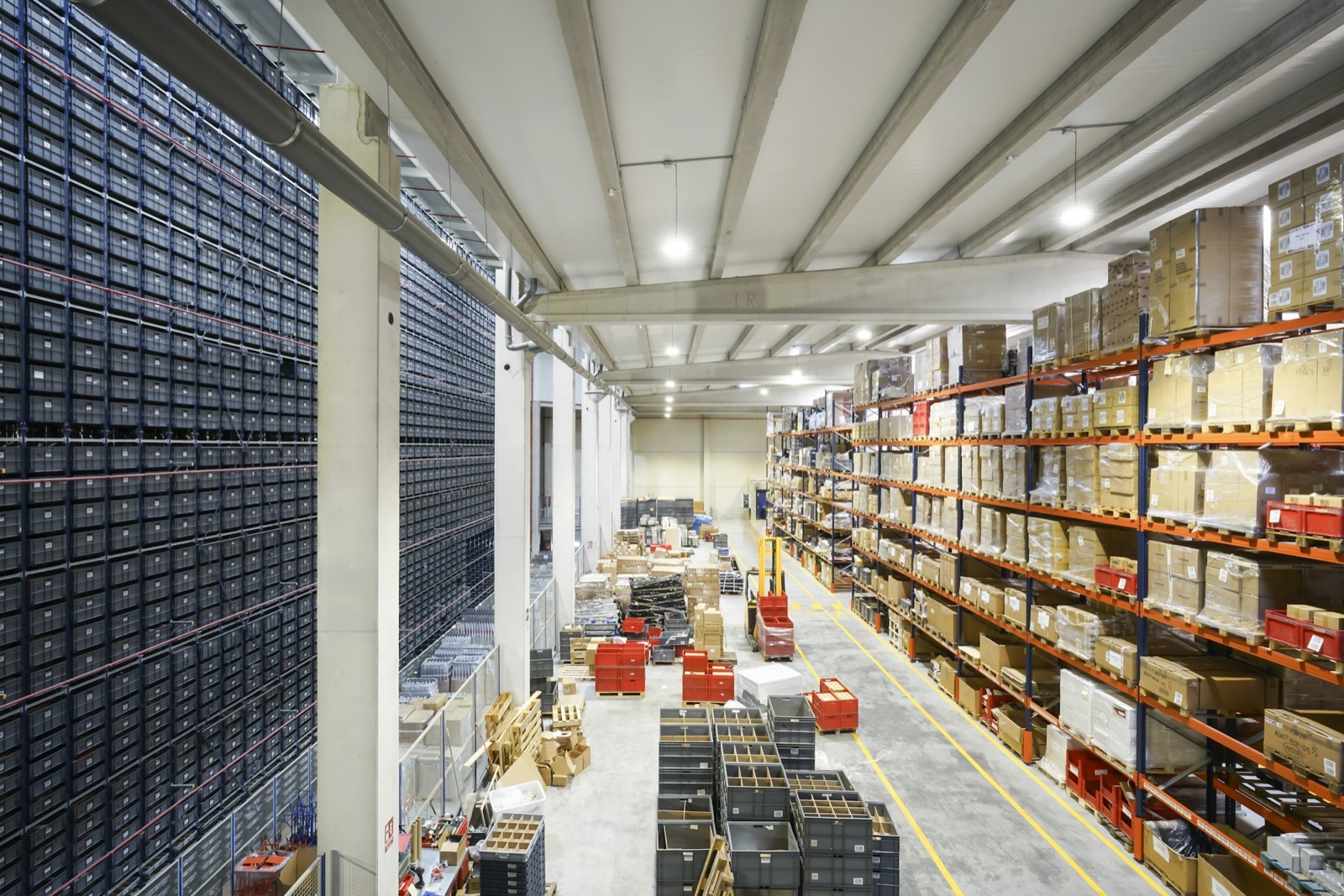
A PSI is more than counting defects. V-Trust's standard checklist covers quantity, appearance, function and performance, workmanship, assembly, accessories, materials, colors and logos, size and measurements, weight, assortment, carton condition, barcode scanning, packing and marking, and shipping marks. QIMA's list is similar and adds product-specific tests such as function and material checks.
What you should add yourself:
- The approved golden sample or reference photos, and the spec sheet with tolerances.
- Product-specific function tests, such as power-on for electronics or zip cycles for bags.
- Carton and label requirements: shipping marks, barcode format, retailer labels.
- The defect list with each item already classed as critical, major or minor.
QIMA delivers reports the same day and V-Trust within 24 hours. Read the photos, not only the pass/fail line, before releasing the balance.
What third-party inspection costs
Inspection is priced per man-day: one inspector, one day on site including travel and report writing. Sofeast's cost explainer (dated 2019) describes a man-day as roughly a 12-hour job with about 4 hours of focused inspection, which is why a large sample with function tests can need more than one man-day. The prices below are list prices from the providers' own pages, accessed 2026-10-10. They are not Flyglow quotes and they change.
| Provider (own published page) | Published rate | Notes |
|---|---|---|
| V-Trust, China | USD 268 per man-day in major manufacturing regions; USD 298 elsewhere | All-inclusive, no extra travel or weekend charge |
| V-Trust, Vietnam | USD 268 per man-day in manufacturing regions | Same all-inclusive terms |
| QCADVISOR | From USD 280 per man-day in most of Asia; USD 380 in Taiwan and South Korea | Mainland China all-inclusive; travel may apply elsewhere; re-inspections at the same rate |
The provider quotes the number of man-days from your sample size and tests. If a simple, single-SKU order is quoted at one man-day, that is about USD 268 to 300 at these published rates, and a two man-day job at QCADVISOR's starting rate would be USD 560. Watch the extras: travel outside covered areas, re-inspections and late cancellations. QIMA's archived terms allow billing for late cancellations and for days lost to wrong information from the client or factory. Ask for the total in writing.
Which inspections to book: a decision framework

Two questions drive the plan: how far do you trust this supplier on this product, and how bad is a defect that reaches your customer?
| Situation | Suggested plan | Why |
|---|---|---|
| Repeat order, same supplier, simple product, clean history | PSI only, Level II, 0 / 2.5 / 4.0 | The process is known; PSI confirms nothing slipped |
| New supplier, or first production run of a new product | Pre-production check, DUPRO, PSI | Catch wrong materials and systematic defects while they can still be fixed |
| Functional or electrical product, or safety-relevant | DUPRO and PSI with function tests; major at 1.0; separate lab testing | Defects are costly and some need test reports |
| Many SKUs or colorways in one order | PSI with extra man-days; check assortment and labels | Errors hide in the mix, not in any one SKU |
| Supplier failed a recent inspection | Tighter plan (Level III or major at 1.0) until two clean lots | Mirrors the standard's switching logic |
| High-value container or a history of short shipments | Add a container loading check after PSI | Confirms what was inspected is what gets loaded |
If you are still choosing a factory, a factory audit and process review or a structured supplier search does more than any inspection.
Buyer scenarios
A buyer reordering 2,400 ceramic mugs from a supplier with three clean orders. The lot falls in code letter K, so the inspector pulls 125 mugs. At 2.5 major, the lot passes with 7 or fewer major defects and fails at 8. If the PSI is quoted at one man-day, the published rates above put it near USD 268 to 300, and earlier checks add little here.
A brand placing a first order of 6,000 USB desk lamps with a new factory. That is code letter L, 200 samples per check. A sensible plan is a pre-production check on components, a DUPRO at about 20% to catch assembly faults early, then a PSI with power-on and function tests and the major limit tightened to 1.0, which fails the lot at 6 major defects instead of 11. Electrical safety testing for the destination market is a separate lab job.
An apparel importer with 12,000 pieces across eight colorways. The full lot is code letter M with 315 samples, but the real risk is assortment: wrong sizes in the wrong cartons, mixed colors, missing hangtags. Ask the inspector to sample across every colorway and scan carton barcodes.
When a lot fails, plus a pre-booking checklist
A fail is a decision point, not an automatic rejection. You can have the factory sort and rework the lot and re-inspect, accept it with a documented discount if defects are minor, or refuse it. QCADVISOR charges re-inspections at the same rate as the first visit, so agree in the purchase order that the supplier pays for re-inspection after a fail. Keep the balance payment until the re-inspection passes. If a reworked lot misses its vessel, check the knock-on effect on your freight mode and booking.
Before you book:
- Purchase order states the AQL levels, the defect classification and who pays for re-inspection.
- Golden sample, spec sheet and packing requirements sent to the inspection provider.
- Production at 100% and at least 80% packed on the inspection date, confirmed by the factory in writing.
- Inspection booked at least two working days before loading; V-Trust asks for that lead time.
- Lab testing booked separately where your market requires it.
- A named person on your side who reads the report the same day and decides.
If you would rather not manage this yourself, Flyglow's quality control team runs pre-production, during production, pre-shipment and container loading checks, and can work alongside strategic sourcing when the supplier is new.
FAQ
What is a pre-shipment inspection?
It is a check of finished, mostly packed goods at the factory before they ship. An inspector pulls a random sample using an AQL table, checks it against your specification and approved sample, and reports pass or fail.
How many units are checked in an AQL inspection?
It depends on the lot size and inspection level, not a fixed percentage. At General Level II, a lot of 501 to 1,200 units needs 80 samples, 1,201 to 3,200 needs 125, and 3,201 to 10,000 needs 200. These sample sizes come from the ANSI/ASQ Z1.4 and ISO 2859-1 tables.
What does AQL 2.5 mean?
AQL 2.5 is the limit used to read the accept and reject numbers from the sampling table, commonly applied to major defects. For a 125-unit sample it means the lot passes with up to 7 major defects and fails at 8. It does not guarantee the whole lot is below 2.5% defective.
How much does a third-party inspection cost in China or Vietnam?
Providers' published list prices run from about USD 268 to 298 per man-day at V-Trust and from USD 280 at QCADVISOR, with USD 380 in Taiwan and South Korea. The provider sets the number of man-days from the sample size and tests. Confirm travel, re-inspection and cancellation charges before booking.
Is a container loading check enough on its own?
Usually not. A loading check confirms quantity, cartons and loading, and QIMA states it is not a substitute for a pre-shipment inspection. Use it after a PSI for high-value shipments.
What happens if my shipment fails inspection?
You decide between rework and re-inspection, accepting with a discount, or refusing the lot. Re-inspections are usually charged like a new inspection, so the purchase order should say the supplier pays after a fail. Hold the balance payment until the lot passes.
Planning an order and not sure which checks it needs? Send us your product, order size and ship date and we will suggest an inspection plan and quote.